

Why Does My Dog Eat Grass? When It's Normal and When to Worry
If you've ever watched your dog happily munch on the backyard lawn and wondered, "Should I stop this?" — you're not alone. Grass eating is one of the most common (and most misunderstood) dog behaviors. The short answer: it's usually completely normal. Let's look at why dogs do it and when it deserves a second look.
Why Do Dogs Eat Grass?
Veterinarians have studied grass eating for years, and the picture is reassuring. Most grass eating is normal exploratory behavior — dogs are curious, and grass has a texture and smell that interests them. Puppies especially will taste-test anything. Some experts believe grass provides fiber and roughage that helps digestion, while others think dogs simply enjoy the flavor, especially in spring when the new growth is sweet. The old myth that "dogs eat grass to make themselves vomit" holds true for only a small minority of cases — most dogs that eat grass don't vomit afterward.
When Grass Eating Is a Problem
Grass eating becomes a concern when it's sudden and frantic — if your dog is gulping grass urgently, drooling, or repeatedly vomiting afterward, that can signal nausea, an upset stomach, or a dietary issue. Also watch for:
- Pesticides and chemicals: if your lawn or your neighbor's is treated, keep your dog off it — fertilizer and weed killers are toxic when ingested.
- Parasites: grass near wildlife droppings can carry intestinal parasites.
- Compulsive eating: if your dog can't stop and it's interfering with walks or meals, that's worth a vet chat.
What You Can Do
For the average healthy dog, a little grass is fine — it passes through harmlessly. You can reduce the habit by offering more fiber-rich dog food, keeping your dog busy with more exercise and enrichment, and making sure they get plenty of fresh water. If you're worried about what they're grazing on, keep walks to pesticide-free areas and consider a basket muzzle during off-leash time as a short-term tool.
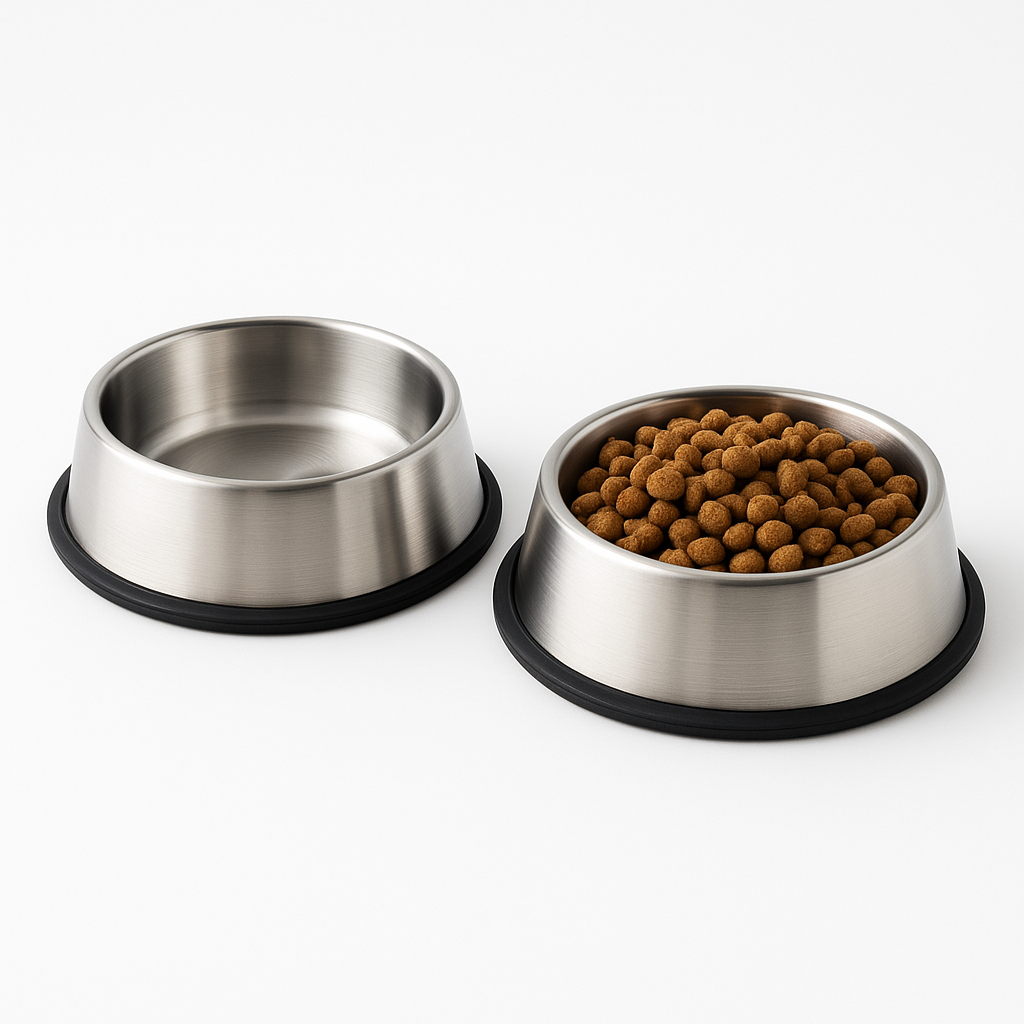
Concerned about something your dog ate? Our Pet First Aid Guide ($7.99) covers what to do for dietary mishaps, plus a printable list of foods that are toxic to dogs. And a sturdy stainless steel bowl set keeps water fresh and tempting — hydrated dogs are less likely to snack on lawn.
Leave a Comment
We'd love to hear from you!
Thanks for reading!