
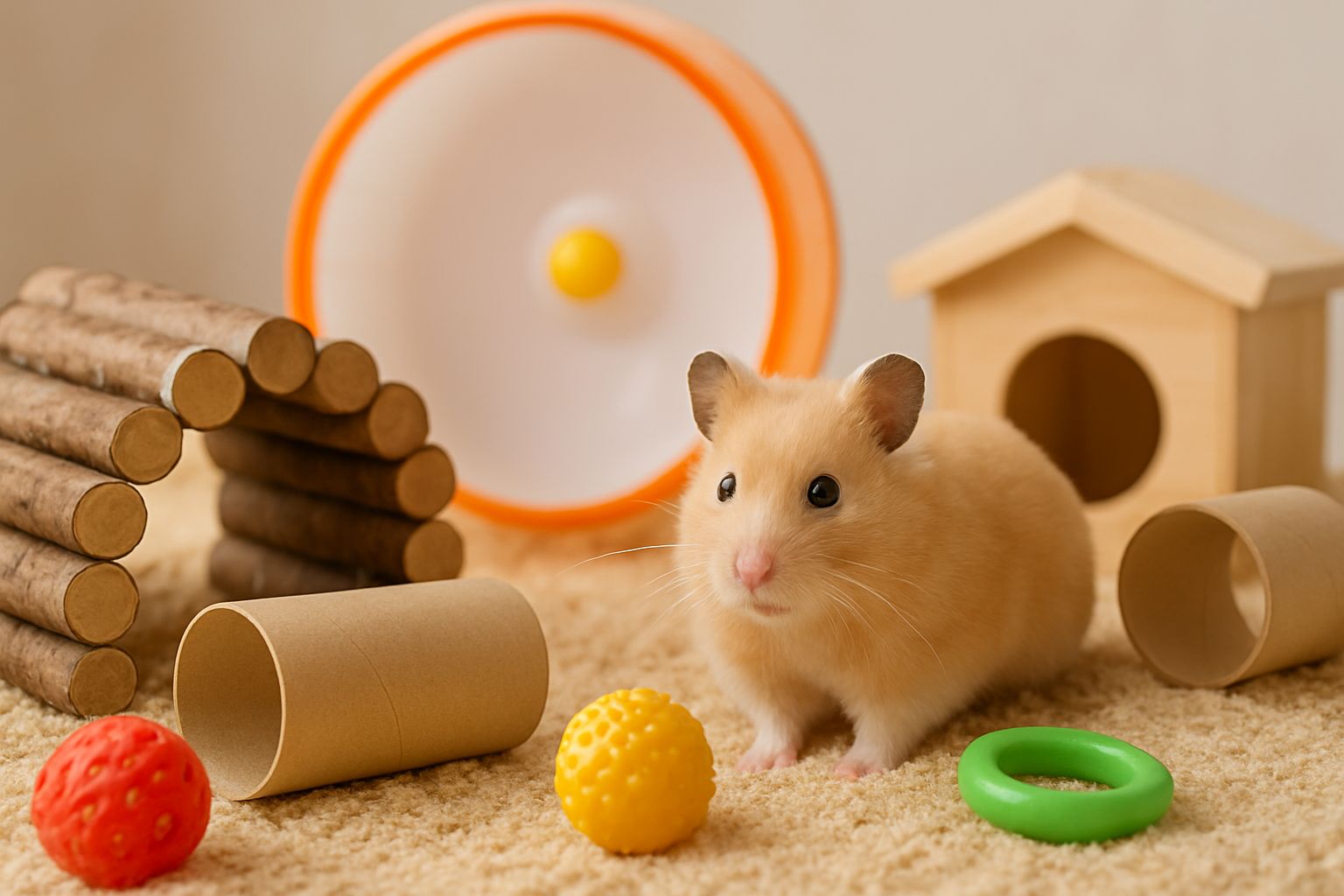
Hamster Enrichment: 10 Ways to Keep Your Tiny Friend Happy
A hamster running in endless circles on a too-small wheel in a too-small cage isn't cute — it's a stress behavior. Hamsters have complex needs and big brains packed into tiny bodies. In the wild, a Syrian hamster covers up to 5 miles per night foraging. Here's how to give your hamster a life worth living.
Start with the Right Foundation
Before enrichment comes proper housing. The old standard — a tiny wire cage with a 6-inch wheel — is outdated and cruel. Modern hamster care standards: at least 600 square inches of unbroken floor space for a Syrian, 450+ for dwarfs. Bin cages (large clear storage bins converted into cages) are an affordable way to hit these numbers. And the wheel? 10-12 inches for Syrians, 8+ for dwarfs — a too-small wheel causes painful spine curvature.
Deep bedding is essential. Hamsters are burrowers — they need at least 6 inches of paper-based bedding to create tunnel systems. This is enrichment #1 and it's non-negotiable.
10 Enrichment Ideas Your Hamster Will Love
1. Scatter feeding: Instead of a bowl, scatter your hamster's food throughout the cage. This turns every meal into a foraging adventure — exactly what their wild instincts demand. Hide seeds in different corners, under bendy bridges, and in cardboard tubes.
2. DIY dig boxes: Fill a small container with coconut fiber substrate or reptile sand (not dust — that causes respiratory issues). Add a few treats buried inside. Your hamster will dig and forage for hours.
3. Cardboard chaos: Save toilet paper tubes, paper towel rolls, and small cardboard boxes. Stuff them with hay and a few sunflower seeds, fold the ends, and toss them in. Instant puzzle feeders. Egg cartons with a treat in each cup are another favorite.
4. Whimzee chews: Those alligator-shaped dog dental chews? Hamsters love them and they're completely safe. They satisfy the need to gnaw and last for weeks. Just get the XS size.
5. Sand baths: Hamsters don't bathe in water — they roll in sand to keep their coats clean and non-greasy. A shallow dish of reptile sand (not chinchilla dust) in the corner of the cage is both grooming and fun. Dwarf hamsters especially love a good sand roll.
6. Spray millet and foraging herbs: Spray millet (sold for birds) and dried foraging herbs like dandelion, chamomile, and marigold give your hamster something natural to nibble and explore. Scatter them around the cage or hang sprays from the lid.
7. Bendy bridges as tunnels: Those wooden bendy bridges sold for small pets? Turn them into tunnels, arches, and hideouts. Hamsters love running through covered pathways — it makes them feel safe while they explore.
8. Tissue paper nesting: Give your hamster a few sheets of plain, unscented tissue paper or toilet paper. They'll shred it and carry it to their nest — watch a hamster run across the cage with a mouthful of TP and try not to smile.
9. Out-of-cage playpen time: Set up a safe playpen (a dry bathtub with a towel works great) with toys, tunnels, and hides. Let your hamster explore for 15-30 minutes under supervision. Never leave them unattended — hamsters are escape artists.
10. Rotate everything: The secret to lasting enrichment is rotation. Don't put everything in at once. Switch out toys, rearrange the layout, and introduce new cardboard creations weekly. A hamster's environment should never be static.
What to Avoid
Hamster balls: Despite being sold everywhere, hamster balls are stressful and dangerous. Poor ventilation, no way to stop, and the risk of falling down stairs or getting stuck. Skip it.
Cotton fluff bedding: The fluffy cotton material sold as "nesting material" can wrap around limbs and cause blockages if ingested. Shredded paper or tissue is safer.
Too much fruit: Hamsters, especially dwarfs, are prone to diabetes. Fruit should be a rare treat — think a blueberry once a week, not daily. Focus on veggies and protein treats like mealworms.
A mentally stimulated hamster is a happy hamster. Want the complete guide to hamster care, plus setup checklists for rabbits and guinea pigs too? Grab our Small Pet Starter Kit for $9.99 — instant PDF download covering housing, feeding, enrichment, and health for all three popular small pets.
Keep reading: rabbit care 101 and guinea pig habitat setup. And check out our Small Pet Starter Kit to make it easy.
Leave a Comment
We'd love to hear from you!
Thanks for reading!