
Rabbit Care 101: Everything First-Time Bunny Owners Need to Know
Rabbits are the third most popular pet in the U.S., but they're also one of the most misunderstood. They're not "easy starter pets" — they're intelligent, social animals with specific care needs and 8-12 year lifespans. If you're considering a bunny, here's what you actually need to know.
Housing: Bigger Than You Think
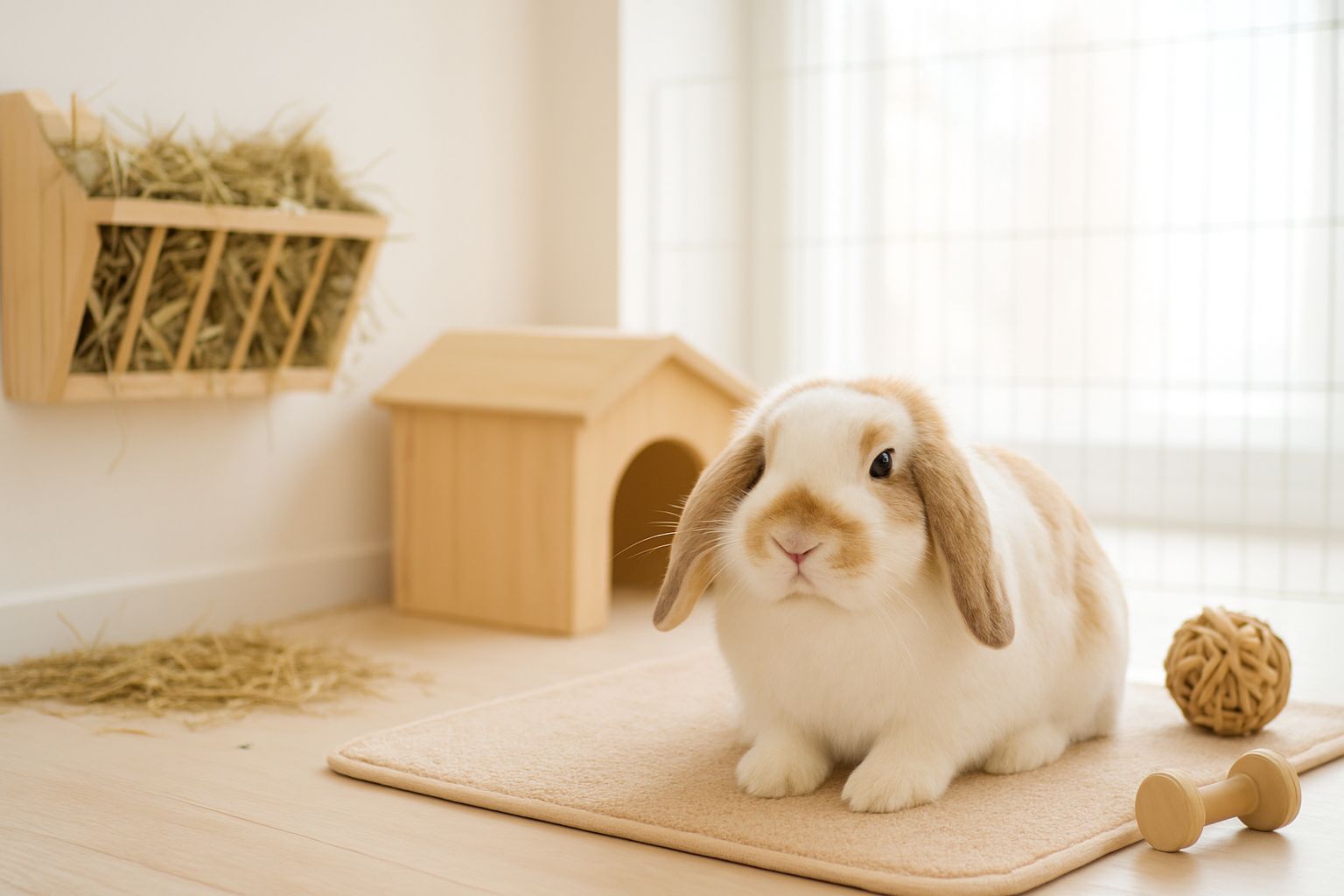
Those small pet-store cages? Too small. Rabbits need at least 4x their body length in floor space — and that's just for sleeping. The ideal setup is an exercise pen (x-pen) with at least 16 square feet of floor space, plus several hours of supervised free-roam time daily. Your rabbit's enclosure should include a litter box (yes, rabbits can be litter-trained), a hide box for security, a hay rack, a water bowl (not a bottle — rabbits drink more from bowls), and toys.
Wire-bottom cages are a hard no — they cause sore hocks (painful foot sores). Solid flooring with fleece blankets or a low-pile rug is what you want.
Diet: Hay Is Everything
A rabbit's diet should be 80% hay — specifically timothy hay for adults (alfalfa for babies under 6 months). Hay wears down their continuously growing teeth and keeps their digestive system moving. Without enough hay, rabbits develop deadly GI stasis.
The remaining 20%: high-quality pellets (about 1/4 cup per 5 lbs of body weight daily), fresh leafy greens (romaine, cilantro, parsley, dandelion greens — introduce slowly), and the occasional treat (a small piece of apple or carrot — but go easy on sugary foods). Fresh water always available.
Litter Training
Rabbits are naturally clean animals and most will litter-train themselves. Put a litter box in the corner they choose as their bathroom, fill it with paper-based or aspen litter (never clay or clumping — dangerous if ingested), and add some hay on top (rabbits like to eat while they go). Spayed/neutered rabbits are far easier to litter train — unaltered rabbits mark territory with urine and droppings.
Bonding and Socialization
Rabbits are social creatures that bond deeply with their humans — and ideally with another rabbit. A bonded pair of rabbits is happier and healthier than a solo rabbit, but introductions must be done carefully in neutral territory. Rabbits show affection by grooming you (licking), flopping over near you (a "bunny flop" means total trust), and running in excited circles around your feet.
Important: rabbits are prey animals. They don't like being picked up — it triggers their instinct that a predator has grabbed them. Get down on their level for cuddles instead. And never, ever pick up a rabbit by the ears or scruff.
Health Essentials
Rabbits need an exotic vet — not all vets treat rabbits. Annual checkups are essential. Spaying/neutering is strongly recommended (reduces cancer risk, improves behavior, enables litter training). Watch for signs of GI stasis (not eating, not pooping, hunched posture) — this is a life-threatening emergency. Rabbit teeth never stop growing, so hay and chew toys aren't optional — they're medical necessities.
Is a Rabbit Right for You?
Rabbits are wonderful pets for patient people who enjoy watching and interacting with an intelligent animal on its own terms. They're not ideal for very young children (rabbits are fragile and startle easily), and they're a 8-12 year commitment. But if you want a pet with real personality who will learn your routines, greet you at the door, and flop contentedly at your feet while you watch TV — a rabbit might be your perfect match.
New to small pets? Grab our Small Pet Starter Kit — $9.99 for the complete guide to rabbits, guinea pigs, and hamsters. Covers housing, feeding, health, and bonding for all three species.
Keep reading: setting up the perfect guinea pig habitat and hamster enrichment ideas. And check out our Small Pet Starter Kit to make it easy.
Leave a Comment
We'd love to hear from you!
Thanks for reading!